
Articles | Published Articles
The role of GM csf factor in inducing autophagy in spermatozoa of patients with asthenoteratozoospermia

writer :
Tahereh Gheliji, Mohammad Hosain Haidari, Marefat Ghaffari Novin, Zahra Shams Mofarahe, Mahsa Kazemi, Latif Gachkar, Pourya Raee, Bahareh Karimi, Hamid Nazarian

author :
-
.png)
Translator :
-

year of publication :

Publishers :
Clinical and Experimental Reproductive Medicine
Abstract
Objective: The aim of this study is to investigate the effects of granulocyte-macrophage colony-stimulating factor (GM-CSF) treatment on the autophagy process and sperm parameters in individuals with asthenoteratozoospermia.
Methods: Twenty semen samples from patients diagnosed with asthenoteratozoospermia were divided into control and treatment groups. Subsequently, 2 ng/mL of GM-CSF was added to the treatment group samples. All samples were then incubated for 1 hour. Post-incubation, the protein levels of light chain 3 II (LC3-II)/LC3-I and autophagy related 7 (Atg7), which are well-known autophagy markers, along with sperm motility, viability, and sperm DNA fragmentation, were analyzed in both study groups.
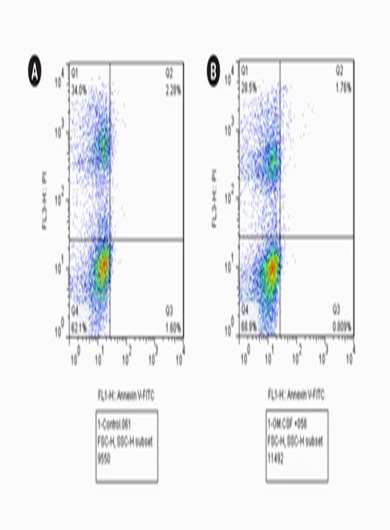
Results: Our study demonstrated significant increases in LC3-II/LC3-I and Atg7 levels, as well as in sperm motility, in the GM-CSF group compared to the control group (p<0.0001). Furthermore, GM-CSF treatment significantly reduced necrotic cell death in the GM-CSF group relative to the control group (p<0.01). There were no significant differences between the groups in terms of sperm viability and DNA fragmentation (p>0.05).
Conclusion: These results revealed that GM-CSF has the potential to significantly induce autophagy in sperm and enhance sperm motility in patients with asthenoteratozoospermia, without adversely affecting sperm viability and DNA integrity. These findings suggest that modifying autophagy with physiological and safe components like GM-CSF may become a promising therapeutic strategy for treating male infertility in the near future.
Keywords: Asthenozoospermia; Autophagy; Granulocyte-macrophage colony-stimulating factor; Sperm quality.